
24th Annual George Adrouny Lecture
Friday, April 17th, 2026
The Department of Biochemistry and Molecular Biology will present the 24th Annual George Adrouny Memorial Lectureship on Friday, April 17th, 10:00 a.m. This year's lecture will be in the Hutchinson Memorial Gallery and Auditorium, 1430 Tulane Avenue. The title of this talk is "Function and dysfunction of p53 tumor suppressor pathway."
The 2026 featured speaker is Guillermina (Gigi) Lozano, Endowed Hubert L. Olive Stringer Distinguished Chair in Oncology in Honor of Sue Gribble Stringer, Division of Discovery Science, Department of Genetics, UT MD Anderson in Houston, Texas. Dr. Lozano is a renowned geneticist recognized for her studies of the p53 tumor suppressor pathway. This pathway is undermined in a large percent of human cancers via mutations and deletions of p53. Her laboratory identified a transcriptional activation function for p53. Using mouse models, her team characterized the physiological importance of Mdm2 and Mdm4 proteins as potent inhibitors of p53. The Mdm proteins are over expressed in many cancers that lack p53 mutations presenting an alternate mechanism of eliminating p53 activity. Other mouse models inheriting the most common p53 mutations revealed gain-of-function phenotypes that drive metastases.
Dr. Lozano received her BS degree in Biology and Mathematics, Magna Cum Laude, at the University of Texas Rio Grande Valley. She completed graduate studies at Rutgers University and the University of Medicine and Dentistry of New Jersey, and a post-doctoral fellowship with Dr. Arnold Levine at Princeton University.
Dr. Lozano was hired as an Instructor at The University of Texas MD Anderson Cancer Center in 1987 and quickly rose through the ranks to her current position as professor and chair of the department of Genetics. Dr. Lozano is a member of the National Academy of Sciences, the National Academy of Medicine and the American Academy of Arts and Sciences. She has received the Minorities in Cancer Research Jane Cooke Wright Lectureship and the Women in Cancer Research Charlotte Friend Lectureship awards both from the American Association for Cancer Research. She is also the recipient of distinguished alumni awards from both her undergraduate and graduate alma maters.
The History of the George Adrouny Memorial Lecture
As a memorial to their late father, the distinguished former Professor of Biochemistry, George A. Adrouny, a memorial lectureship was established in 2000 by his children and family to honor his memory. The Department of Biochemistry, Tulane University Health Sciences Center, School of Medicine, is proud to host this annual event.
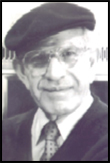 George A. Adrouny was born of Armenian parents in Turkey on April 2nd, 1912. He received his BA in chemistry in 1934, and a degree in pharmaceutical chemistry in 1940, both from the American University of Beirut. While working as a freelance pharmacist, he also taught chemistry and biology at Aleppo College in Aleppo, Syria. In 1951, a Smith-Mundt Fellowship permitted him to begin graduate studies at Emery University where he earned a Ph.D. in Biochemistry in 1954. After two years as a Research Associate in Biochemistry at Emory, he was recruited to the Tulane University School of Medicine, Department of Biochemistry, where he ultimately rose to the rank of full professor.
Dr. Adrouny’s research interests were diverse. His identification and characterization of the fire ant venom was published in 1959 in Science magazine. He also published papers in the areas of cardiac glycogen metabolism, intestinal dextran-hydrolyzing enzymes, biochemical effects of growth hormone and the phylogenic and evolutionary importance of hickory nut and pecan oils.
He headed the Foreign Fellows Program, specifically created for foreign graduate students studying at Tulane. He also was placed in charge of the Medical Biochemistry course, a post that he enjoyed until his retirement in 1981. In recognition of his devotion to the organization and teaching of this course, the Owl Club gave him a certificate of recognition in 1981. He was named Professor Emeritus following his retirement from the Medical School.
Dr. Adrouny was a member of the Society of Sigma Xi, the New York Academy of Sciences, the American Chemical Society and he was a Fellow of the American Association for the Advancement of Sciences. He was listed in the Who’s Who of American Education in 1967-68.
In 1987, a few years after the death of Alice K. Adrouny, his wife of 38 years, Dr. Adrouny moved to Maryland to be near family where he lived until his death on November 24, 1999.
April 11, 2025
Tony Hu, PhD
Weatherhead Presidential Chair in Biotechnology Innovation, in the Department of Biochemistry and Molecular Biology, Tulane University School of Medicine, New Orleans, Louisiana
Enabling Personalized Diagnosis with Intelligent Nanotechnologies
April 22, 2024
William Wimley, PhD
George A. Adrouny, PhD Professor in Biochemistry in the Department of Biochemistry and Molecular Biology
Tulane University School of Medicine, New Orleans, Louisiana
Synthetic Molecular Evolution of Peptide Antibiotics
April 18, 2023
Lieping Chen, MD, PhD
United Technologies Corporation Professor in Cancer Research
and Professor of Immunobiology, of Dermatology and of Medicine (Medical Oncology)
Yale School of Medicine, New Haven, Connecticut
The coming era of tumor-site focused immunotherapy
April 22, 2022
Danny Reinberg, PhD
Howard Hughes Medical Institute
Terry and Mel Karmazin Professor of Biochemistry & Molecular Pharmacology
NYU Langone School of Medicine at Smilow Research Center
Department of Biochemistry and Molecular Pharmacology New York, New York
Polycomb, Inheritance and Disease
May 11, 2021
Zhijian “James” Chen, PhD
George L. MacGregor Distinguished Chair in Biomedical Science
UT Southwestern Medical Center
Dallas, Texas
Igniting an immune response with cGAS
May 8, 2020 - Covid-19 Pandemic - No Lecture (Medical/Masters students were presented with the George A. Adrouny Memorial Lecture Outstanding Achievement in Medical Biochemistry Award)
May 10, 2019
Frederick W. Alt, PhD
Charles A. Janeway Professor of Pediatrics
Professor, Genetics, Harvard Medical School
Investigator, Howard Hughes Medical Institute, Boston Children’s Hospital Member of Cancer Immunology and Lymphoma & Myeloma
at Dana-Farber/Harvard Cancer Center
Boston, Massachusetts
The Fundamental Role of Active Chromosome Loop Extrusion in Antibody Diversification and Genome Rearrangements
April 19, 2018
James Manley, PhD
Julian Clarence Levi Professor of Life Sciences
Columbia University
New York, New York
Disregulation of mRNA splicing in myelodysplastic syndromes and cancer
April 10, 2017
Judith Campisi, PhD
Professor of Biogerontology
Buck Institute for Research on Aging
Senior Scientist, Lawrence Berkeley National Laboratory
Novato, California
Cancer and Aging: Rival Demons?
April 11, 2016
Hongtao Yu, PhD
Michael L. Rosenberg Scholar in Medical Research
Department of Pharmacology
Howard Hughes Medical Institute
University of Texas Southwestern Medical Center
Houston, Texas
Mitotic regulators in chromosome segregation and beyond
November 1, 2015 (in conjunction with the 8th International MDM2 Workshop)
Carol Prives, PhD
DaCosta Professor of Biological Sciences
Department of Biological Sciences
Columbia University, New York, New York
p53-Dependent and Independent Roles of Mdm2 in Cancer Cells and Human Disease
April 14, 2014
Wei Gu, PhD
Abraham and Mildred Goldstein Professor
Department of Pathology & Cell Biology
Institute for Genetics
Herbert Irving Cancer Research Center
Columbia University
New York, New York
Do We Really Know How p53 Suppresses Tumorigenesis?
April 12, 2013
Arnold J. Levine, PhD
Institute for Advanced Studies, School of Natural Sciences, Princeton, New Jersey
The Evolution of the p53 Family of Genes and their Role in Cancer
May 21, 2012
Robert G. Roeder, PhD
Rockefeller University, New York, New York
Transcriptional Regulatory Mechanisms in Animal Cells
April 15, 2011
Ellen Sidransky, MD
National Institutes of Health, Bethesda, Maryland
Gaucher Disease and Parkinsonism: Insights From a Rare Disorder
April 9, 2010
Thomas Seyfried, PhD
Boston College, Boston, Massachusetts
Ganglioside Storage Disease: On the Road to Management
April 17, 2009
Stephen G. Sligar, PhD
University of Illinois, Urbana, Illinois
Elucidating the Structure and Function of Membrane Proteins through Nanotechnology
April 7, 2008
Marlene Belfort, PhD
NYS Department of Health, Center for Medicine, Albany, New York
Genome Invaders: Mobile Self-Splicing Introns in Bacteria
April 13, 2007
Gerald W. Hart, PhD
Johns Hopkins University School of Medicine, Bethesda, Maryland
Dynamic Cycling of O-GlcNAc: Interplay with Phosphorylation and Roles in Diabetes, Signaling and Transcription
2005 and 2006 – Hurricane Katrina – No Lectures
October 1, 2004
Diana S. Beattie, PhD
West Virginia University School of Medicine, Morgantown, West Virginia
The Unique Mitochondrion of the African Parasite, Trypanosoma brucei
September 8, 2003
Tim Townes, PhD
University of Alabama, Birmingham, Alabama
Human Globin Gene Regulation and Genetic Strategies for Correcting Thalassemias and Sickle Cell Disease
September 23, 2002
Dagmar Ringe, PhD
Brandeis University, Waltham, Massachusetts
From Sequence to Function: How Easy Is It?
September 10, 2001
Billy Hudson, PhD
University of Kansas Medical Center, Kansas City, Kansas
Basement Membrane Collagen: An Ancient Protein Essential for Tissue Development
November 6, 2000
Kenneth G. Mann, PhD
University of Vermont, Burlington, Vermont
Blood Coagulation at the Turn of the Century