
New cohort of National Academy of Inventors Senior Members includes four from Tulane School of Medicine
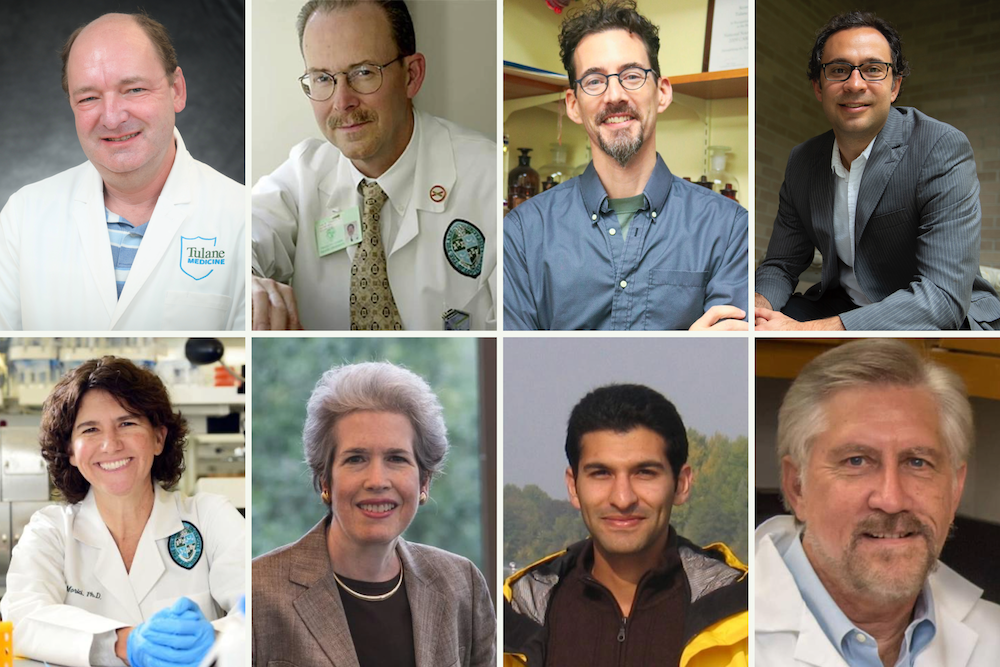
Eight Tulane University researchers have been named Senior Members by the National Academy of Inventors (NAI), a designation that recognizes rising stars who drive a culture of innovation on campus and help develop the next generation of inventors. The 2026 cohort includes four scientists from Tulane University School of Medicine. Click here for the full Tulane list.
Matthew E. Burow, PhD, associate professor of Medicine and Surgery in Hematology & Medical Oncology at Tulane University School of Medicine, who advances translational research in hormone-responsive breast cancer and metabolic disease. His work focuses on developing therapeutics derived from plant-based compounds, including glyceollins, that target estrogen signaling and tumor growth pathways. By bridging molecular discoveries with patented treatment strategies, Burrow aims to improve outcomes for patients while addressing the connection between obesity, metabolism and cancer progression.
John D. Clements, PhD, professor emeritus of Microbiology and Immunology at Tulane University School of Medicine, is a global leader in vaccine development and mucosal immunology. His research pioneered the development of the double mutant heat-labile toxin (dmLT) adjuvant, a technology designed to strengthen immune responses and improve vaccine effectiveness. His work has advanced next-generation vaccines for infectious diseases affecting vulnerable populations worldwide.
Lisa Morici, PhD, professor of Microbiology and Immunology at Tulane University School of Medicine, develops next-generation vaccines to prevent emerging and re-emerging infectious diseases. Her research has pioneered the use of outer membrane vesicle (OMV) technology to create vaccines against dangerous pathogens such as Burkholderia pseudomalleiand B. mallei. She also co-developed an OMV-based adjuvant, T-vant, designed to boost immune responses and improve vaccine effectiveness through multiple methods of delivery, including oral, intranasal and intramuscular administration.
James E. Zadina, PhD, professor of Medicine, Pharmacology and Neuroscience at Tulane University School of Medicine and Director of the Neuroscience Laboratory at the Southeast Louisiana Veterans Health Care System studies the neurobiology of opioids and the mechanisms of pain and addiction. His research led to the discovery of endomorphins, naturally occurring opioid peptides in the brain, and focuses on developing new pain medications that provide powerful relief with fewer side effects and lower risk of addiction than traditional opioids.
