
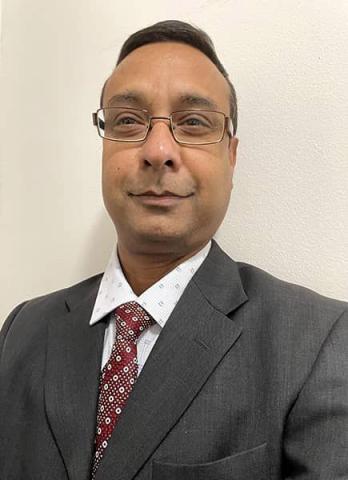
Partha Chandra, PhD
Assistant Professor
Biography
Academic Training
- Bachelor of Science in Chemistry: University of Calcutta, Calcutta, India (1993)
- Master of Science in Agricultural Chamistry: University of Calcutta, Calcutta, India (1995)
- Doctor of Philosophy in Agricultural Chamistry: University of Calcutta, Calcutta, India (2003)
- Senior Research Fellow, RCAIS, Calcutta, India (2000-2003)
- Senior Research Fellow, National Institute of Cholera and Enteric Diseases, Calcutta, India (2003-2004)
- Research Fellow, World Federation of Scientists, Switzerland; Host: ICMR, India (2005-2006)
- Research Associate, ICMR-Virus Unit, Calcutta, India (2006-2007)
- Post-Doctoral Fellow, Department of Pathology, Tulane School of Medicine. LA, USA (2008-2015)
Staff/Faculty Appointments
- Assistant Professor, Department of Pharmacology, Tulane School of Medicine. LA, USA (2024-present).
- Research Scientist II, Department of Pharmacology, Tulane School of Medicine. LA, USA (2015-2019).
- Research Instructor (Non-Tenure Track): Department of Pharmacology, Tulane School of Medicine. LA, USA (2019-onward).
Areas of Expertise
Research
Broadly, with my chemistry background, my research field includes virology, molecular biology, gene therapy and cancer with a keen focus to understand the molecular mechanism of the development of chronic and latent viral infection and antiviral drug resistance that in turn will accelerate the pathogenesis and cancer. In Post-Doctoral tenures, I was involved to understand the molecular virology of Hepatitis B (HBV) and Hepatitis C (HCV) viruses. I have studied the association of HBV genotypes/sub-genotypes, their genomic mutation pattern and their correlation with liver pathogenesis. As a leading group member, I have developed both in vitro and in vivo HCV infection models which allowed us to understand the mechanism of chronic viral infection, host-virus interaction, and antiviral drug resistance. I have developed alternative treatment approaches such as humanized recombinant antibody, siRNA-nanosome, and IFN-λ against HCV infection up to pre-clinical level. Recently, I am investigating the pathogenesis of HIV-exosome on microvasculature in cerebral circulation. At the same time, as a leading team member, I am exploring the sex-dependent differential expression of genes as well as proteins in cerebral microvessels using both RNA-Seq and LC-MS/MS-based proteomic approaches. I am also engaged to explore mesenchymal stem-cell based gene therapy for latent HIV-1 eradication by “shock and kill” based approach. I’m working with both undergraduate, graduate students and junior Post-Doctoral fellows in the laboratory with an advisory capacity on their projects. I have published a substantial number of research articles in prestigious scientific journals, served in editorial board membership, reviewed scientific articles, attended international conferences, given award lectures, received patents and awards, and wrote book chapters and review articles.
Contributions
PubMed list of my published work: http://www.ncbi.nlm.nih.gov/pubmed/?term=Chandra+PK
Google Scholar: https://scholar.google.com/citations?user=Pe75AbsAAAAJ&hl=en
