
Xian-Feng Wang, PhD
Research Assistant Professor
Education & Affiliations
Biography
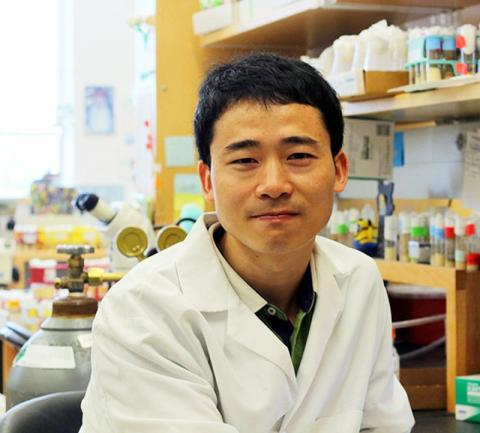
Dr. Xian-Feng Wang is an Assistant Professor in the Department of Biochemistry and Molecular Biology at Tulane University School of Medicine and a researcher with the Tulane Cancer Center. His research investigates the cellular and molecular mechanisms that drive organ development, tissue regeneration, and cancer progression, with a focus on tumor biology, cell dynamics, and sex-specific differences using Drosophila melanogaster as a model system.
Research
Dr. Wang's research seeks to uncover the fundamental mechanisms that govern organ development and tumor initiation and progression, with a particular focus on how cellular dynamics, sex differences, and tissue context shape developmental programs and tumor behavior. Using Drosophila melanogaster as a powerful genetically tractable in vivo model, his research uncovers conserved biological processes that are often difficult to dissect in mammalian systems but are fundamental to understanding organogenesis, tissue homeostasis, and cancer biology.
A central focus of Dr. Wang's research is to define the cellular and systemic mechanisms that regulate tissue growth and tumor evolution. His work has established critical roles for cell ploidy dynamics in organ development and tumorigenesis (Wang et al., 2021, Developmental Cell; Zhou and Wang et al., 2026, Journal of Cell Biology) and uncovered
systemic mechanisms that drive sex-specific differences in tumor growth regulation (Wang et al., 2024, Science Advances). These studies have revealed new principles governing how intrinsic cellular states and organismal physiology interact to influence tissue development and cancer progression.
Looking forward, Dr. Wang's research aims to define the molecular and cellular mechanisms underlying growth regulation, tissue regeneration, and tumor heterogeneity across developmental and disease contexts. By leveraging the experimental power of Drosophila and integrating discoveries with mammalian systems, his long-term goal is to uncover conserved biological principles that advance our understanding of fundamental cancer biology and provide a conceptual foundation for the development of future therapeutic strategies.
Contributions
1. Zhou, Y., Wang, X. (co-first author), Tan, X., Nara, S., Huang, Y.C., Tamori, Y., and Deng, W.M.* (2026). Polyploidy reprograms epithelial cells for motility and phagocytosis via stress signaling. J Cell Biol 225. 10.1083/jcb.202507096.
2. Huang, Y.C., Almeida Machado Costa, C., Vergara Ruiz, N., Wang, X., Jevitt, A., Breneman, C.M., Han, C., and Deng, W.M.* (2025). Polyploidy promotes transformation of epithelial cells into nonprofessional phagocytes. Proc Natl Acad Sci U S A 122, e2427293122. 10.1073/pnas.2427293122.
3. Cong, F., Bao, H., Wang, X., Tang, Y., Bao, Y., Poulton, J.S., Liu, X., Wong, A.C., Ji, X., and Deng, W.M.* (2025). Translocation of gut bacteria promotes tumor-associated mortality by inducing immune-activated renal damage. EMBO J 44, 3586-3613. 10.1038/s44318-025-00458-5.
4. Wang, X., Bao, H., Huang, Y.C., Barua, A., Lai, C.M., Sun, J., Zhou, Y., Cong, F., Gong, S., Chang, C.H., and Deng, W.M.* (2024). Sex-dimorphic tumor growth is regulated by tumor microenvironmental and systemic signals. Sci Adv 10, eads4229. 10.1126/sciadv.ads4229.
5. Teng, Z., Yang, L., Zhang, Q., Chen, Y., Wang, X., Zheng, Y., Tian, A., Tian, D., Lin, Z., Deng, W.M., and Liu, H.* (2024). Topoisomerase I is an evolutionarily conserved key regulator for satellite DNA transcription. Nat Commun 15, 5151. 10.1038/s41467-024-49567-5.
6. Tian, A., Wang, X.F., Xu, Y., Morejon, V., Huang, Y.C., Nwapuda, C., and Deng, W.M.* (2023). EGFR signaling controls directionality of epithelial multilayer formation upon loss of cell polarity. EMBO J 42, e113856. 10.15252/embj.2023113856.
7. Chatterjee, D., Cong, F., Wang, X.F., Machado Costa, C.A., Huang, Y.C., and Deng, W.M.* (2023). Cell polarity opposes Jak/STAT-mediated Escargot activation that drives intratumor heterogeneity in a Drosophila tumor model. Cell Rep 42, 112061. 10.1016/j.celrep.2023.112061.
8. Chatterjee, D., Costa, C.A.M., Wang, X.F., Jevitt, A., Huang, Y.C., and Deng, W.M.* (2022). Single-cell transcriptomics identifies Keap1-Nrf2 regulated collective invasion in a Drosophila tumor model. Elife 11. 10.7554/eLife.80956.
9. Almeida Machado Costa, C., Wang, X.F., Ellsworth, C., and Deng, W.M.* (2022). Polyploidy in development and tumor models in Drosophila. Semin Cancer Biol 81, 106-118. 10.1016/j.semcancer.2021.09.011.
10. Wang, X.F., Yang, S.A., Gong, S., Chang, C.H., Portilla, J.M., Chatterjee, D., Irianto, J., Bao, H., Huang, Y.C., and Deng, W.M.* (2021). Polyploid mitosis and depolyploidization promote chromosomal instability and tumor progression in a Notch-induced tumor model. Dev Cell 56, 1976-1988 e1974. 10.1016/j.devcel.2021.05.017.
11. Jevitt, A., Huang, Y.C., Zhang, S.M., Chatterjee, D., Wang, X.F., Xie, G.Q., and Deng, W.M.* (2021). Modeling Notch-Induced Tumor Cell Survival in the Drosophila Ovary Identifies Cellular and Transcriptional Response to Nuclear NICD Accumulation. Cells 10. 10.3390/cells10092222.
12. Gong, S., Zhang, Y., Bao, H., Wang, X., Chang, C.H., Huang, Y.C., and Deng, W.M.* (2021). Tumor Allotransplantation in Drosophila melanogaster with a Programmable Auto-Nanoliter Injector. J Vis Exp. 10.3791/62229.
13. Wang, X.F., Liu, J.X., Ma, Z.Y., Shen, Y., Zhang, H.R., Zhou, Z.Z., Suzuki, E., Liu, Q.X., and Hirose, S.* (2020). Evolutionarily Conserved Roles for Apontic in Induction and Subsequent Decline of Cyclin E Expression. iScience 23, 101369. 10.1016/j.isci.2020.101369.
14. Jevitt, A., Chatterjee, D., Xie, G., Wang, X.F., Otwell, T., Huang, Y.C., and Deng, W.M.* (2020). A single-cell atlas of adult Drosophila ovary identifies transcriptional programs and somatic cell lineage regulating oogenesis. PLoS Biol 18, e3000538. 10.1371/journal.pbio.3000538.
15. Nishioka, K., Wang, X.F., Miyazaki, H., Soejima, H., and Hirose, S.* (2018). Mbf1 ensures Polycomb silencing by protecting E(z) mRNA from degradation by Pacman. Development 145. 10.1242/dev.162461.
16. Wang, X.F., Shen, Y., Cheng, Q., Fu, C.L., Zhou, Z.Z., Hirose, S., and Liu, Q.X.* (2017). Apontic directly activates hedgehog and cyclin E for proper organ growth and patterning. Sci Rep 7, 12470. 10.1038/s41598-017-12766-w.
17. Fu, C.L., Wang, X.F., Cheng, Q., Wang, D., Hirose, S., and Liu, Q.X.* (2016). The T-box transcription factor Midline regulates wing development by repressing wingless and hedgehog in Drosophila. Sci Rep 6, 27981. 10.1038/srep27981.
18. Liu, Q.X.*, Wang, X.F., Ikeo, K., Hirose, S., Gehring, W.J., and Gojobori, T.* (2014). Evolutionarily conserved transcription factor Apontic controls the G1/S progression by inducing cyclin E during eye development. Proc Natl Acad Sci U S A 111, 9497-9502. 10.1073/pnas.1407145111.