
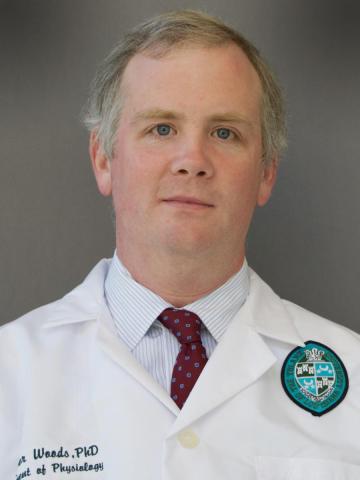
T. Cooper Woods, PhD
Associate Professor of Physiology and Medicine
Education & Affiliations
Areas of Expertise
Research
Research in my laboratory aims to elucidate the impact of co-morbidities such as Diabetes Mellitus and Chronic Kidney Disease on the progression of cardiovascular disease. A focus of this research is toward understanding the molecular mechanisms underlying the increased intimal thickening seen in the diabetic population. These studies are currently examining the how the presence of diabetes promotes the acceleration of vascular smooth muscle cell proliferation and migration, two components of intimal thickening, through increases in specific microRNAs. Additional projects focus on the development of biomarkers for the identification of patients at high risk for cardiovascular disease and complications following angioplasty.
Contributions
Publication listing for T. Cooper Woods
Awards & Recognitions
Dr. T. Cooper Woods, Assistant Professor in Physiology, was recently highlighted in an article in the August 9, 2017 issue of Tulane New Wave news. Dr. Woods, along with Dr. Bazan from Ochsner Medical Center, have identified biomarkers in the blood that could one day help doctors diagnose a recent ischemic stroke, according to a new study in the journal Circulation: Cardiovascular Genetics. This research has the potential to having a blood test to assist with stroke diagnosis. To read the full article, click here.
